De-Escalating Behavior
In last week's blog, we talked about what to do when a behavior occurs at church. If you missed it, you can check it out here.
Today, we are going to walk through some tips for getting through and past the behavior. I will be the first to admit that I am not an expert on behavior, so I am thankful that most of this information came from a course on de-escalation from The Autism Helper. I am so grateful for experts who share their knowledge for our benefit!
This one is a little bit longer than some of our other emails, but it is full of some good stuff!
What is de-escalation?
The process of de-escalation happens once the behavior starts. These tips are meant to help you get through to the end of the behavior and work on what comes next. De-escalation is crucial for ensuring the safety of your students, as well as maintaining a positive relationship with them.
What Does De-escalation Look Like?
Sometimes, when a behavior is happening, we might try to take control of the situation by telling the student to stop, explaining the rules of the classroom, etc. But when a student in the middle of a big behavior, they are not mentally present to learn. A behavior is not a teaching moment. We have to get through the de-escalation process before we can teach.
Start by regulating yourself. A dysregulated adult cannot help a dysregulated student. Before you do anything, take one deep breath. That's probably all you have time for. Take one deep breath and then move through these steps:
1. Give the student some space
Take a step back
Move some of the other students out of the room/area
Move the student to a calm-down area or sensory room if possible
2. Reduce noise and overwhelm
I know this can be very difficult for a lot of us in a teaching space, but (and I say this with love) stop talking
Use a quiet voice when you do need to talk
Use visual supports instead of talking, when you can
Do not make demands or ask questions
Communicate to the student that you are here for them while setting and maintaining boundaries.
Once the student has had some time and is visibly calmer and/or open to communicating
3. Offer coping strategies
Provide visuals
Provide choices
Allow for processing time
Avoid over-reminding
Co-regulate by asking them to join you in a coping strategy or exercise (something simple, like “Come join me while I get a drink of water.”)
Once the student engages in a coping strategy
4. Divert and Distract
This does not require anything of the student, it's just something neutral to refocus their attention.
"Hey, look at that bird over there"
Tell a story about your day, as simple and mundane as you'd like to be
Describe a picture on the wall and what you like about it
5. Repair the Relationship
Reaffirm support in your connection with the student
SAY:
You are not mad at them
You care about them
You are here to support them
THEN you can talk about rules and boundaries
Explain why the behavior was unsafe
Use logical consequences
You break it, you fix it
If a table was knocked over during the behavior, have the student put the table and items with it back where they belong.
Loss of a privilege
If an iPad was damaged during the behavior, the student won't be able to have iPad time today.
Positive Time Out or Break
If the student is still feeling overwhelmed during the next activity, allow them to take a time out or a break (not as a punishment, just as a way of regulating themselves).
6. Create a plan for the future
Reflect with the student as appropriate.
What could we do next time? (coping strategy)
What are we not going to do next time? (behavior)
Reflect with volunteers/staff
How can we avoid this in the future?
This is where the ABCs of Behavior come in handy!
We want church to be a safe, joyful place for everyone who attends. But we also need to be realistic that behaviors can and do happen, even at church. Moving through de-escalation and reminding the student that he/she is safe and cared for will help reinforce that your church and your ministry are a positive place to be.
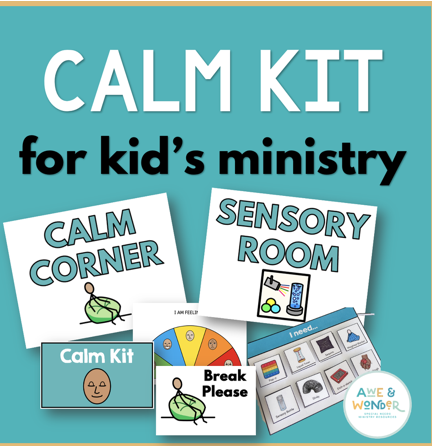
As always, we at Awe & Wonder want to give you the best tools we can for helping in these moments of big behaviors. We have some products in our online shop that we hope will be useful should behaviors arise. Click the photos for the links!