What Are Adapted Books?
Adapted books are one of my favorite tools for making the Bible accessible to every learner.
But what exactly are they?
Why do they matter?
And how can churches and families actually use them?
Let’s break it down.
What Are Adapted Books?
Adapted books are created to provide access to stories and content in a way that is accessible to the reader or learner.
They were originally developed in educational settings to help students access literature and general education curriculum. There isn’t one specific format that makes something an adapted book. Instead, the term simply means the material has been changed in some way to remove barriers and increase understanding.
And here’s the important part for ministry:
Just like special education teachers adapt general education content, we can adapt Bible stories and Scripture without changing or watering down the theological meaning.
The truth stays the same, but the method and way these truths are presented changes so that they are accessible to MORE people!
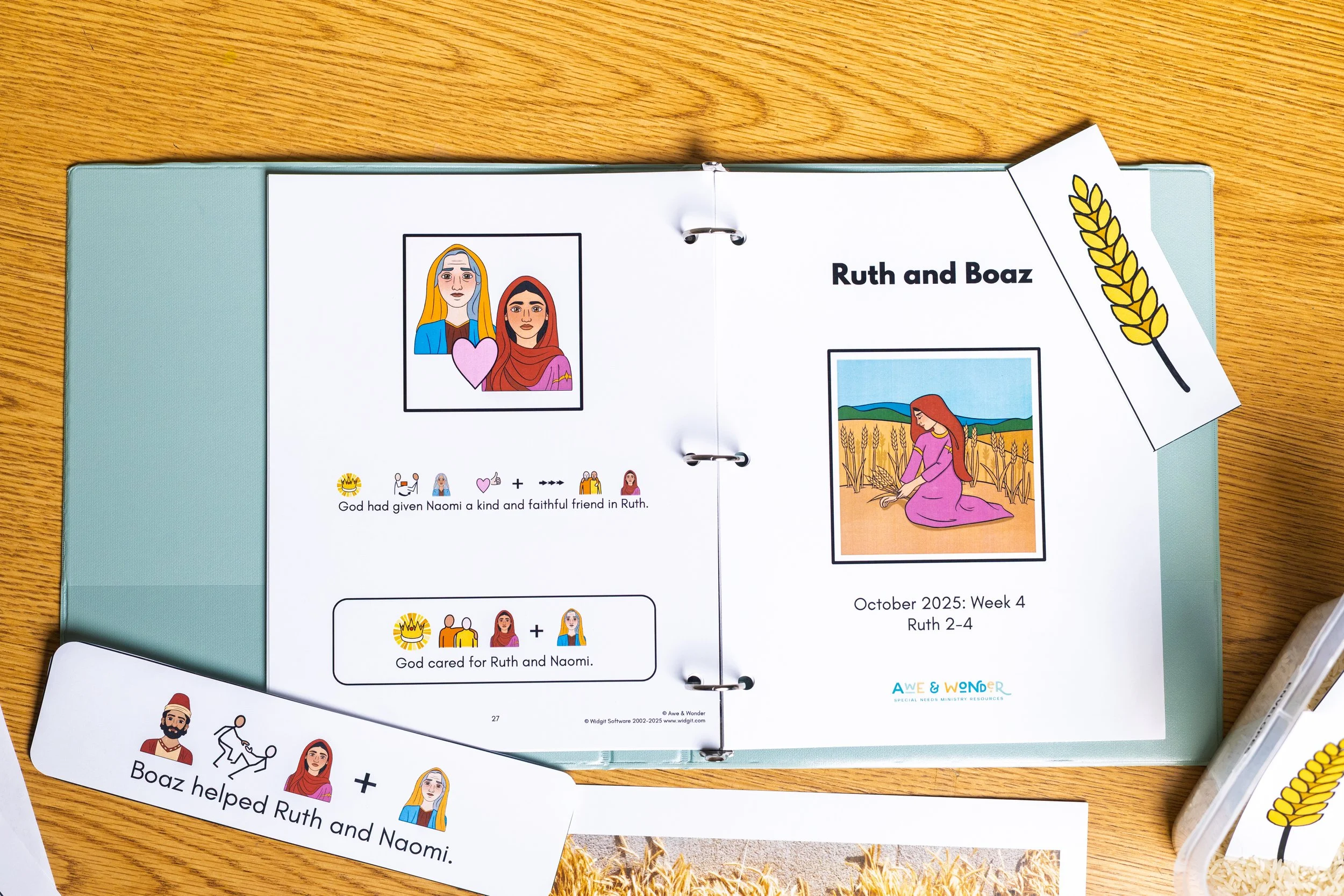
Two Main Types of Adaptations
When we talk about adapting books, most supports fall into two main categories:
Physical adaptations
Cognitive adaptations
Some students may need one or the other adaptation, but some learners may benefit from a combination of the two.
Physical Adaptations
Physical adaptations help learners who may not be able to use a typical book due to motor, visual, or sensory challenges or impairments.
Think of these as supports that help someone handle, see, or interact with the book.
Examples of physical adaptations:
Page turners (like foam shapes on the edge of pages to add space between pages for easier turning or small tabs added to each page to help students turn the page)
Disassembling a book, laminating pages, and rebinding with spiral binding
Puff paint or tactile elements added to titles or important words
Increased line spacing or enlarged print
Offering digital access instead of print
Audio versions of the text
Braille text
Velcro pieces that students can manipulate
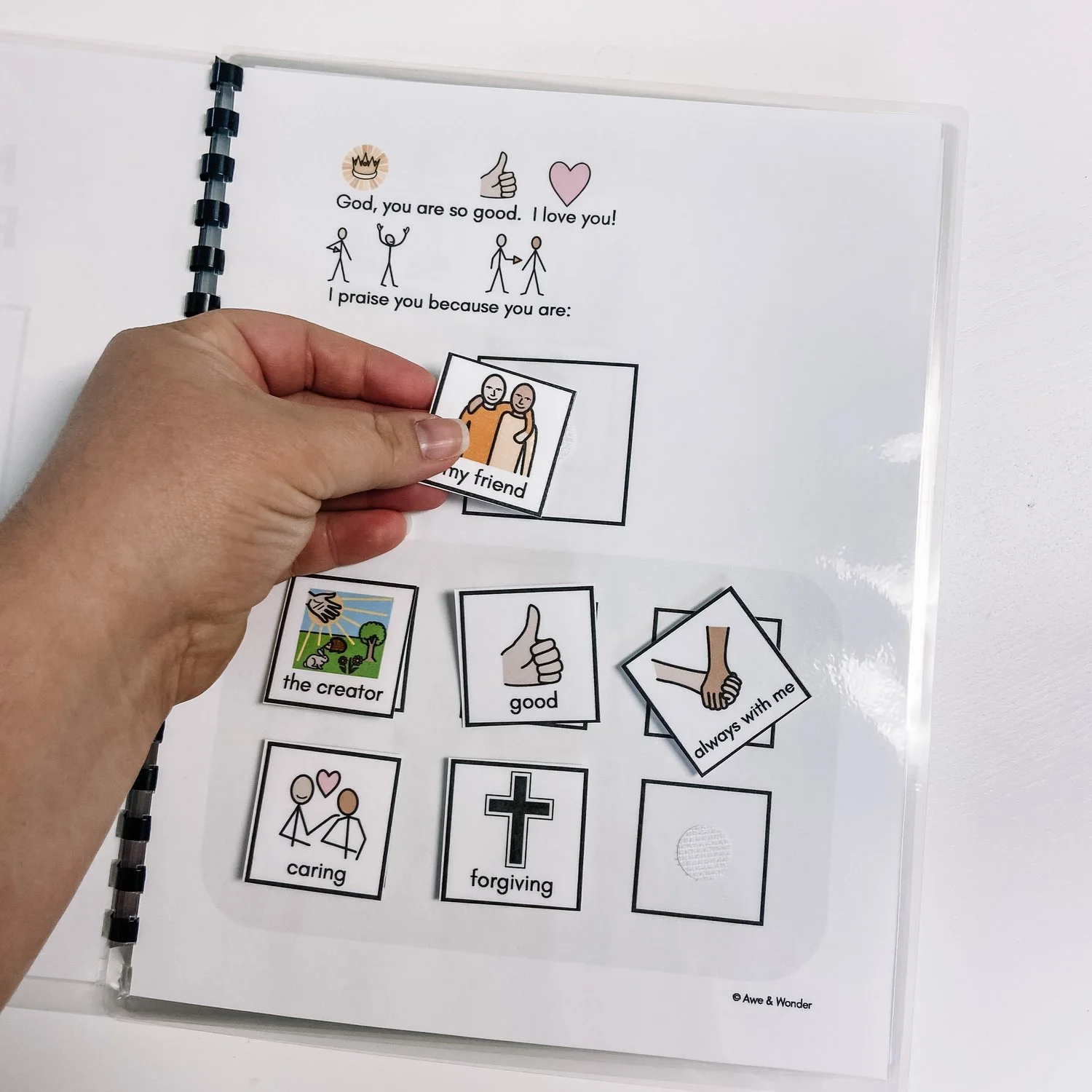
Moveable Velcro pieces are a great physical adaptation you’ll find in all of Awe & Wonder’s adapted books!
These changes can be the difference between a student being dependent on a teacher or caregiver or being able to participate independently.
Cognitive Adaptations
Cognitive adaptations to books support understanding.
Some learners may be able to physically hold the book but still struggle to process vocabulary, sentences, abstract ideas, or too much information on a page.
So we adapt the language and presentation to help support these learners.
Examples of cognitive adaptations:
Rewriting the text to simplify the content
Defining vocabulary within the text or replacing complex words with more simple words
Expanding the text to make implied ideas explicit
Adding a repeated line on every page that reinforces the main truth
Adding symbol/picture supports for non-readers or AAC users
Pairing the story with real objects or figures to make ideas concrete
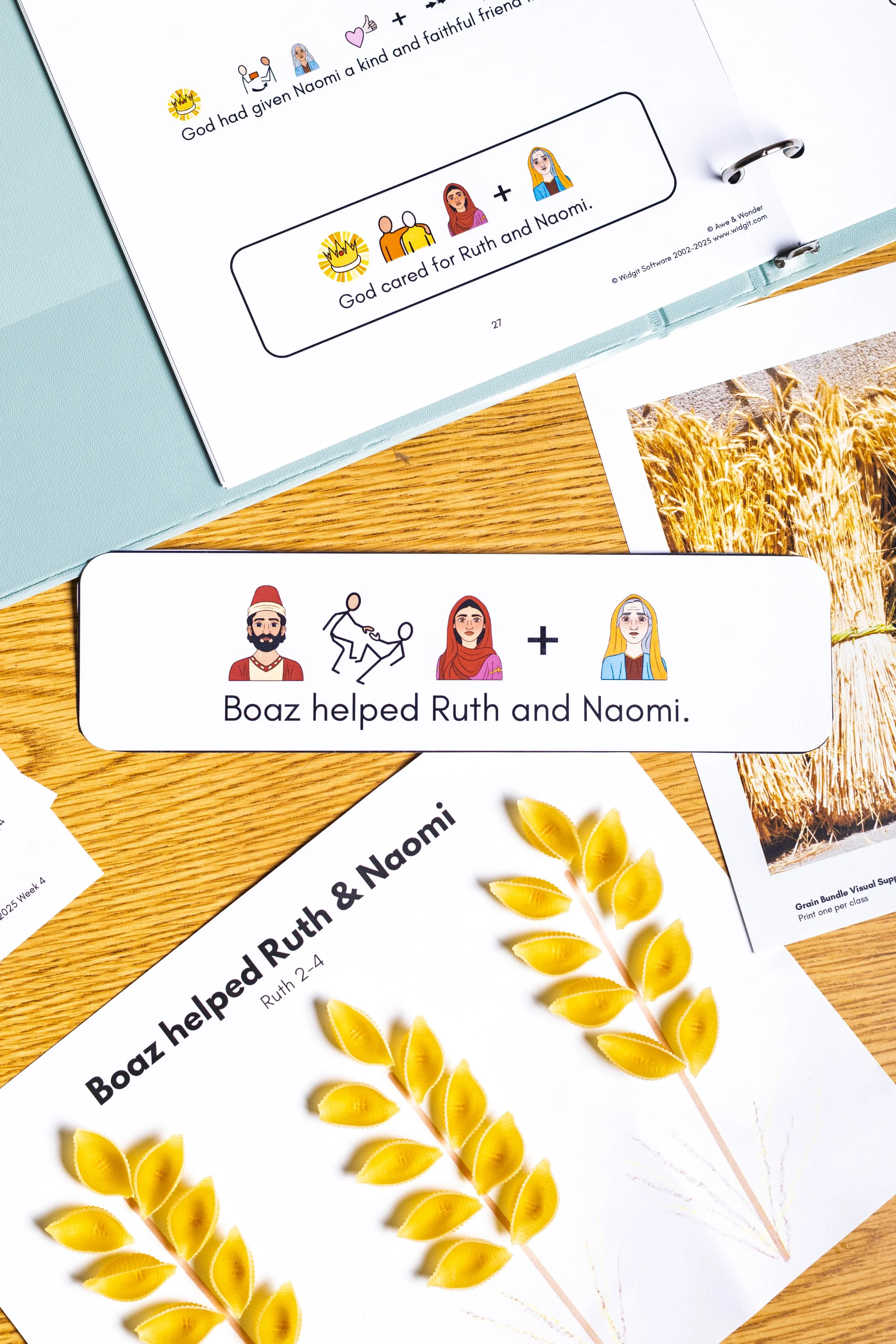
Awe & Wonder adapted books use repeated lines to reinforce the main idea of the story!
These supports help learners move from just hearing words to actually understanding meaning. And that is so incredibly important to us as we share stories from the Bible and the Truth of God’s word with our learners.
Using Adapted Books in Church
Please hear me when I say that the goal of using adapted books is never to water down Scripture. The goal is access to the Gospel!
We want every person, regardless of ability, to have the opportunity to know who God is, understand His Word, and respond to the Gospel.
Adapted books help us remove barriers that might otherwise stand in the way of that.
Adapted books can become a core part of how you teach in your disability ministry classroom or inclusive ministry environments.
They work for:
Small group instruction
One-to-one buddy support
Previewing a lesson before large group
Reviewing the Bible story after teaching
Sending home so families can continue discipleship
Giving non-verbal learners a way to participate
Helping reduce anxiety by increasing comprehension
Adapted books are also really helpful for volunteers, as they give them something tangible to share with and use to teach the students they serve. When the content is already accessible, leaders and volunteers spend less time trying to figure out how to modify or explain on the spot and more time building relationships with students.
Awe & Wonder provides ready-to-use adapted Bible storybooks each month as part of our curriculum subscription so churches and families can focus more on ministering to their learners and less on prep work.