Scaffolding in Bible Study
A frequently asked question is how to provide more or less support for learning with disabilities while studying the Bible. The special education term for this is scaffolding.
What is Scaffolding?
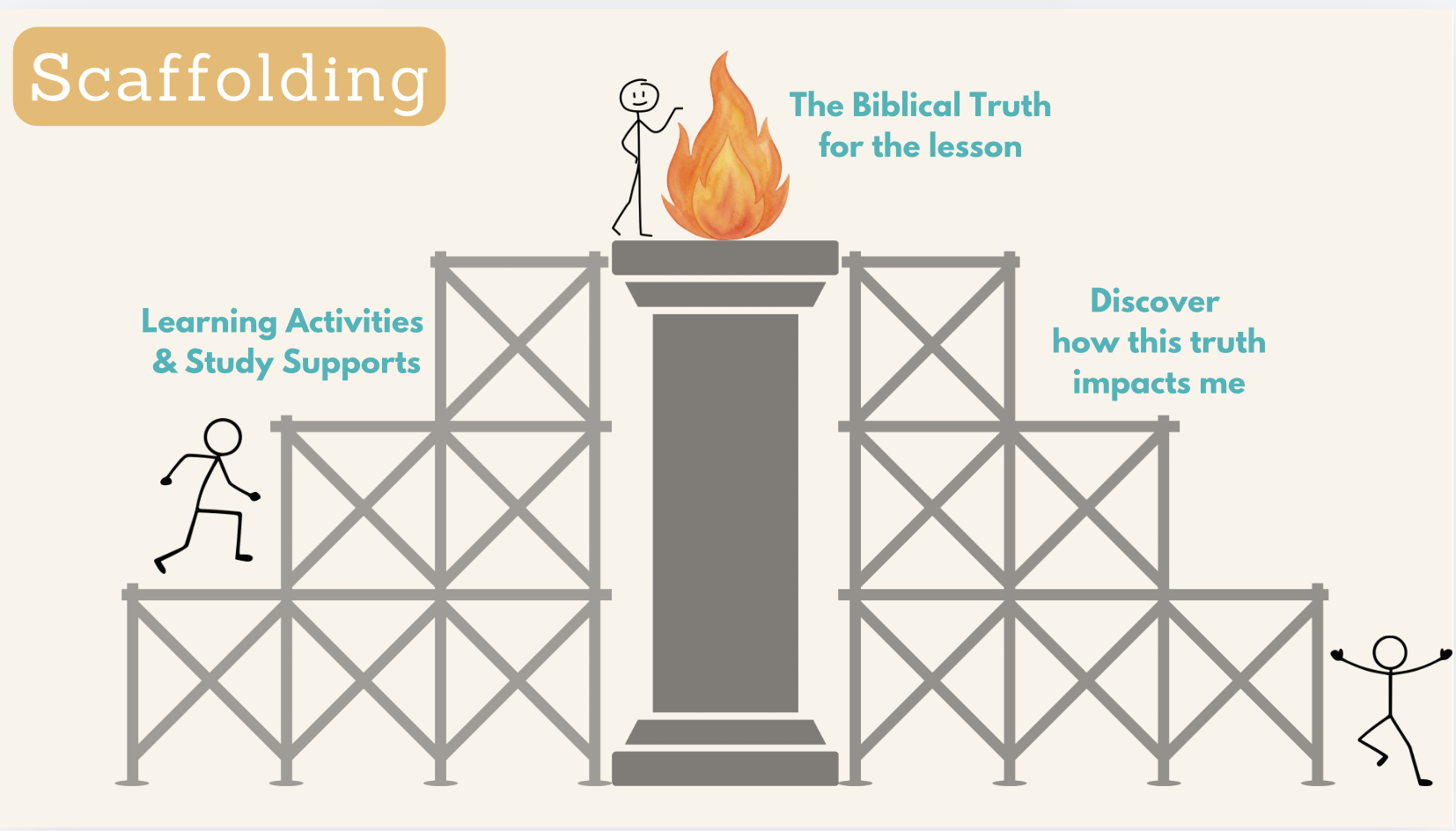
Scaffolding is a fancy term for providing the necessary support along the way in order to meet a learning objective, gradually reducing support the closer you get to the objective.
What does scaffolding look like in Bible study?
Whether we realize it or not, we have likely all experienced scaffolding in our own history of studying the Bible. Scripture even prescribes this method, with Paul telling fellow believers, “I gave you milk, not solid food, for you were not yet ready for it.” 1 Corinthians 3:2a
For those of us who grew up in church, our experience of studying the Bible probably went something like this:
When we were very young, we probably learned Bible stories through songs, skits, or very animated storytelling.
Then as we got older, we interacted with the actual biblical text, although it may have been simplified a bit for our understanding.
Later, we attended Sunday school classes and small groups to learn how to read the Bible and talk about it.
Finally, we had the tools to study the Bible on our own and understand it.
That is exactly what we hope to achieve with learners with disabilities, too!
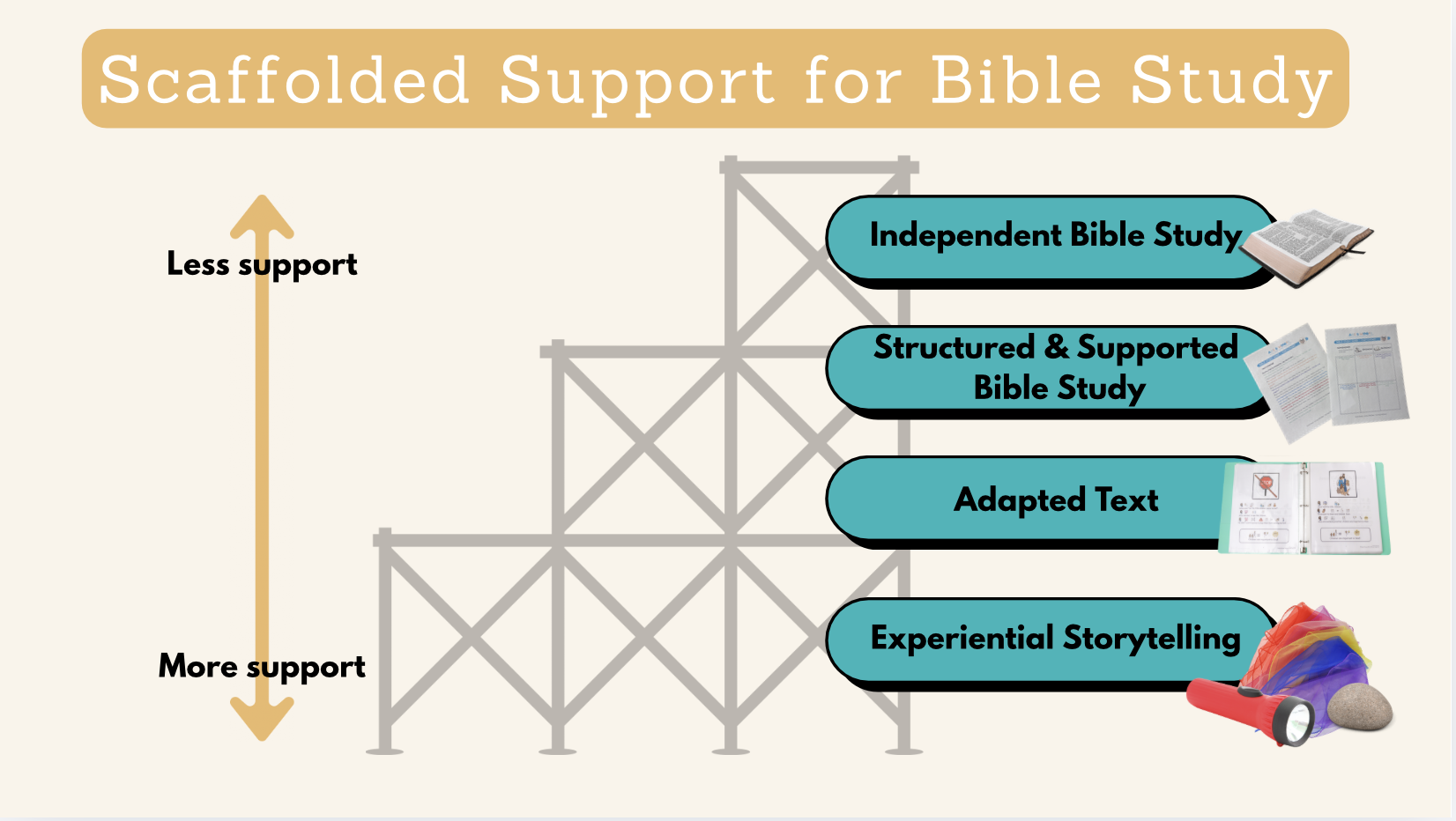
Experiential Storytelling
Experiential Storytelling is another term for Multi-Sensory Storytelling, which we’ve covered on the blog for the last few weeks! This includes engaging the senses in tandem with telling the Bible story so learners have a better grasp of the story. This often leads to better engagement from students and better retention/memory.
Adapted Text
Adapted Text is a foundational support of the Awe & Wonder curriculum. With 4 different levels of adaptations, learners can engage with the text at their appropriate level. Providing symbol support, shortened text, and increased spacing between lines allows students to access the Bible story without becoming overwhelmed by the visual load.
But what about when our learners are ready for more?
That's where the new Teen & Adult resources come in!
We received excellent feedback that many of our church subscribers were teaching teens and adults who needed Biblical study beyond sensory experiences and activities. They were ready for solid food, so to speak.
How does the Teen & Adult Curriculum support Bible study?
In the Teen & Adult curriculum, you will find a few tools to help you thoughtfully walk students through the text of the Bible:
Scripture Mapping
In the Scripture Mapping section, you'll find a printed version of the text both in color and black and white. You'll also find corresponding questions that will allow students to dig into the Word to find the answers. There are color-coded sheets as well as black-and-white sheets for you to provide the appropriate level of support to each learner.
Review Questions
These questions are designed to help students remember what happened in the story they just read. Available in fill-in-the-blank or with multiple-choice symbol supports, learners will be able to access the questions at whatever level is most appropriate for them.
Live it Out Questions
Here we have the application section of our Bible study. Students will be able to apply the text to their own lives, interacting with the living, breathing Word of God. Application questions are also available in fill-in-the-blank or symbol format.
Weekly Devo
The weekly devotional guide is a great tool for students to continue their Bible study at home. This allows learners to saturate themselves in Biblical Truth all throughout the week and come back to church on Sunday excited to dive in!