Multi-sensory Storytelling: Sound
In last week's blog, we gave a quick overview of sensory storytelling and ways to incorporate sight and touch into your Bible lessons. This week, we're exploring how Bible stories can come to life through sounds!
Sound
The addition of sounds can make storytelling much more dynamic while also allowing for greater student participation.
Do you remember the children's book We're Going on a Bear Hunt? That's one of my favorite examples of sound being used in storytelling because you don't need any additional tools--just your mouth and your hands/feet. Think of how much less interesting that book would be without the addition of the squelch squirch of the mud and hoo woo hoo woo of the wind.
You can apply the same principles to your Bible teaching! Finding little moments to add sounds--like the cheering of the crowd as Jesus enters Jerusalem, or the claps of thunder before Jesus calmed the storm--will engage your learners and make storytelling more memorable.
Adding sounds to your Bible teaching can seem intimidating, but once you get some practice, you'll start seeing all kinds of different ways to incorporate it!
While you can add sound to stories without many tools, here are some tools that we love and find helpful!
Recordable Buttons
Recordable Buttons--in my opinion--are one of the most versatile tools you can have in a disability ministry classroom. They can be used to record memory verses, repeated phrases, conversational responses (for friends who are nonspeaking or need additional prompting), sound effects, and so much more!
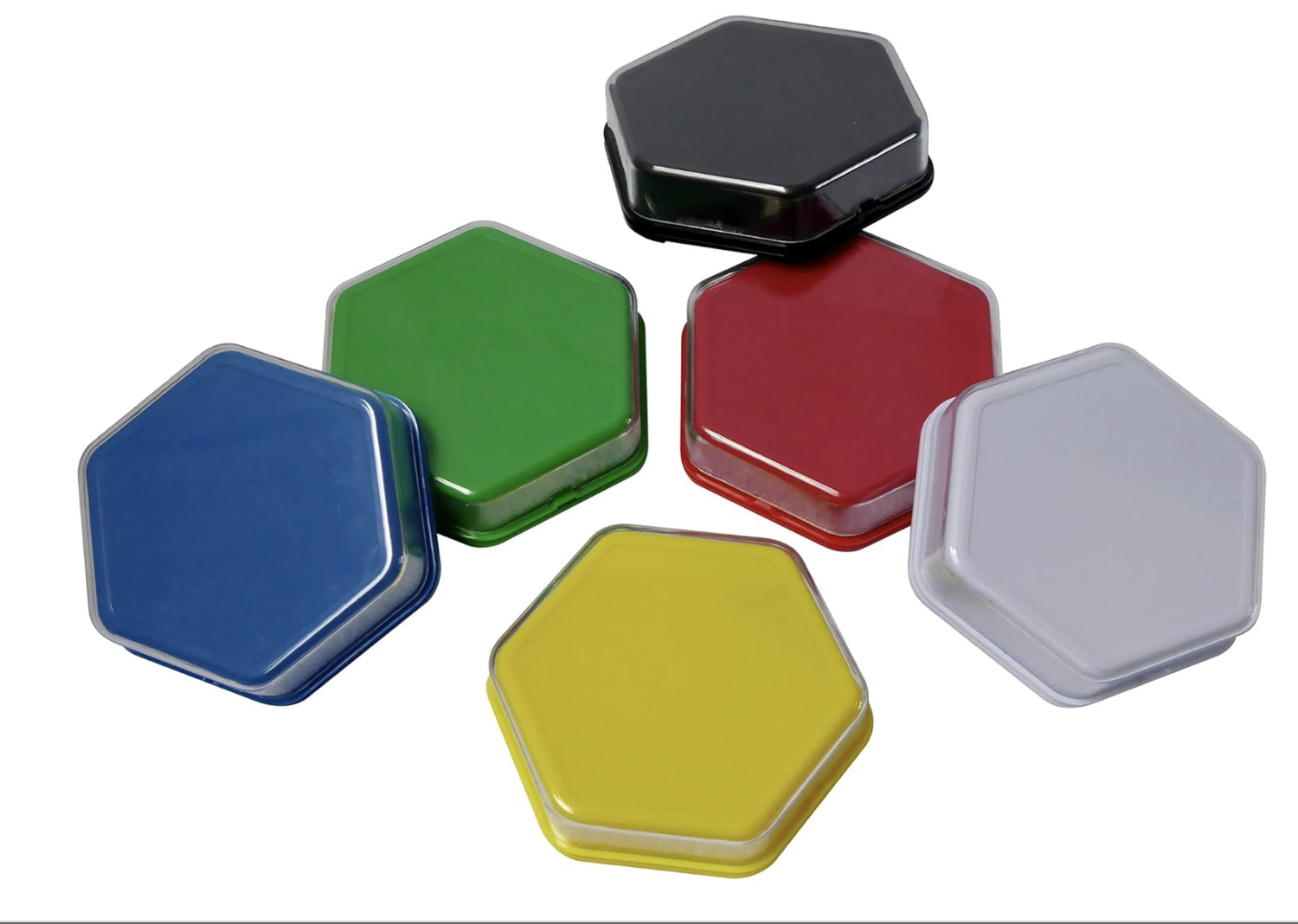
These are some of our favorites to use, but there are many different kinds out there!
This brand, Talking Tiles, is made specifically for special education. They have super clear sound recording abilities and have an on/off switch!
Instruments and Objects
Drums, tambourines, and rain sticks can all easily be used to incorporate sound into a Bible story. Have some extra coconut halves lying around? They make the perfect “clop cop” of a horse or donkey's hooves. Chains and coins can be used to emphasize clinking or metallic sounds.
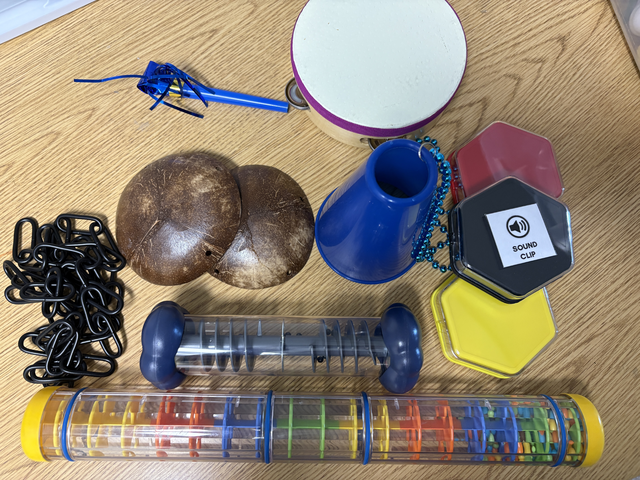
You can be as creative as you'd like!
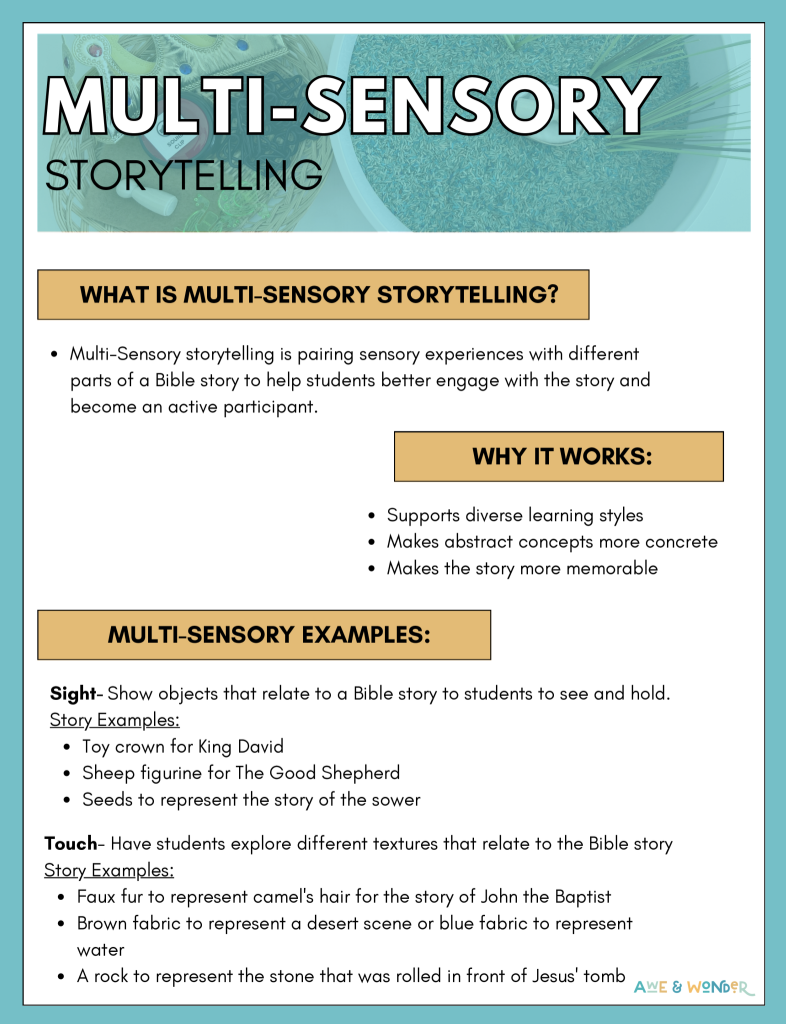
For more tips on Multi-sensory Storytelling, you can download a FREE handout here!
How does it work with Awe & Wonder's curriculum?
Each week, you'll find a list of recommended items to grab from around your church or home to help you tell that week's story. Our sensory storytelling chart matches each page of that week's adapted book. We'll give you suggestions for objects, sounds, movements, and more that relate to that page of the book.
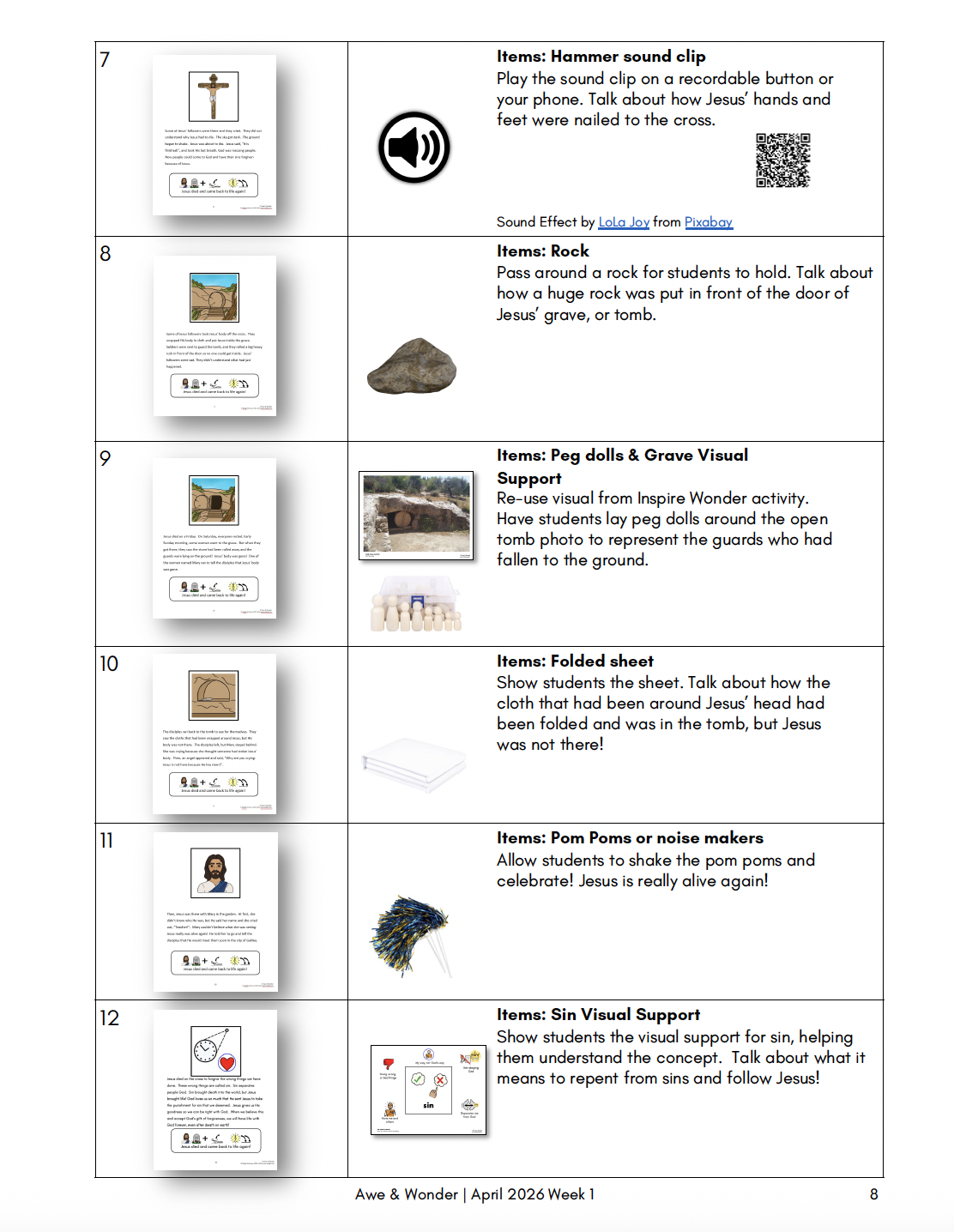
We even include sound clip files that can be recorded on a recordable button or played on your smartphone by scanning a QR code.